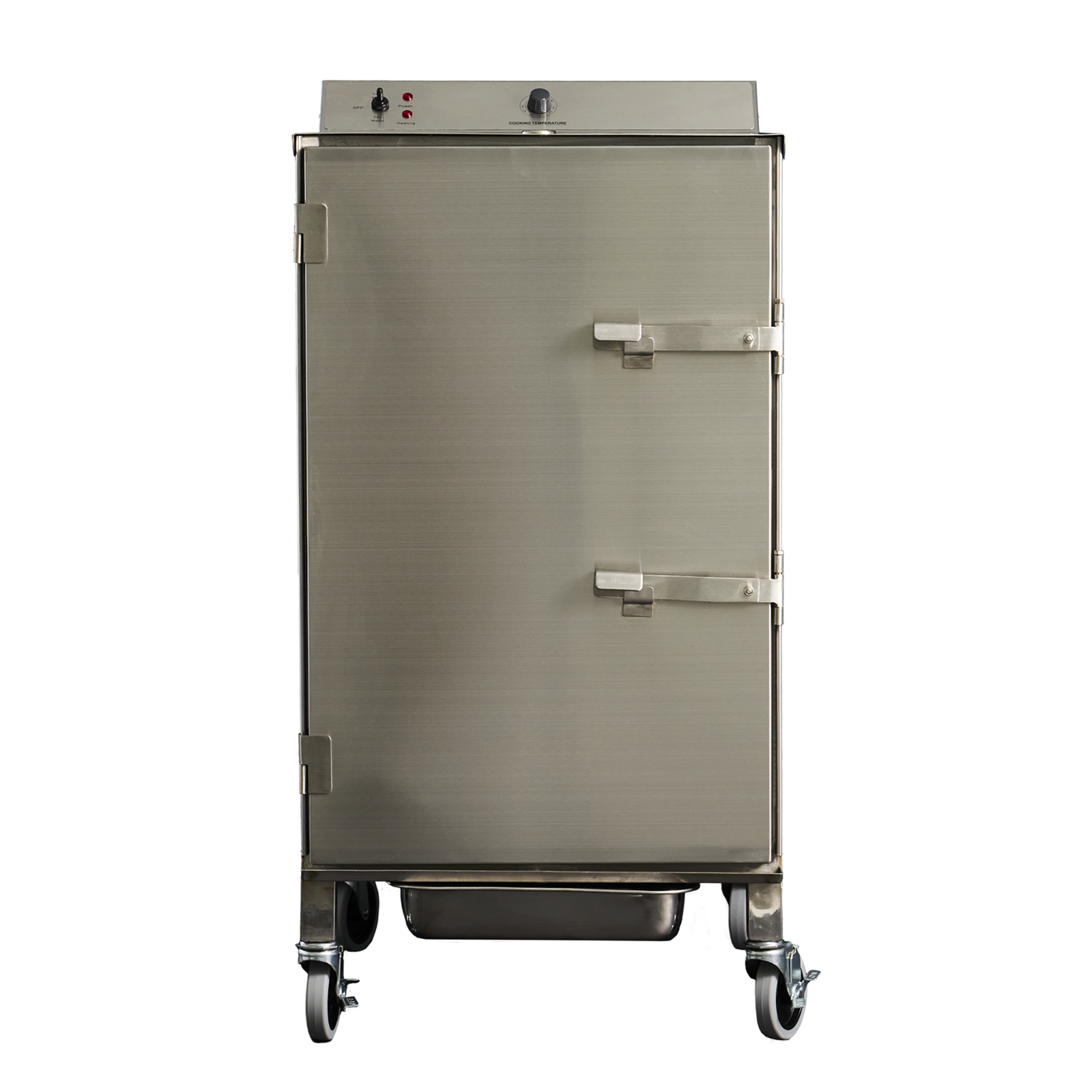
STAFF-MANAGED RACK COOKING
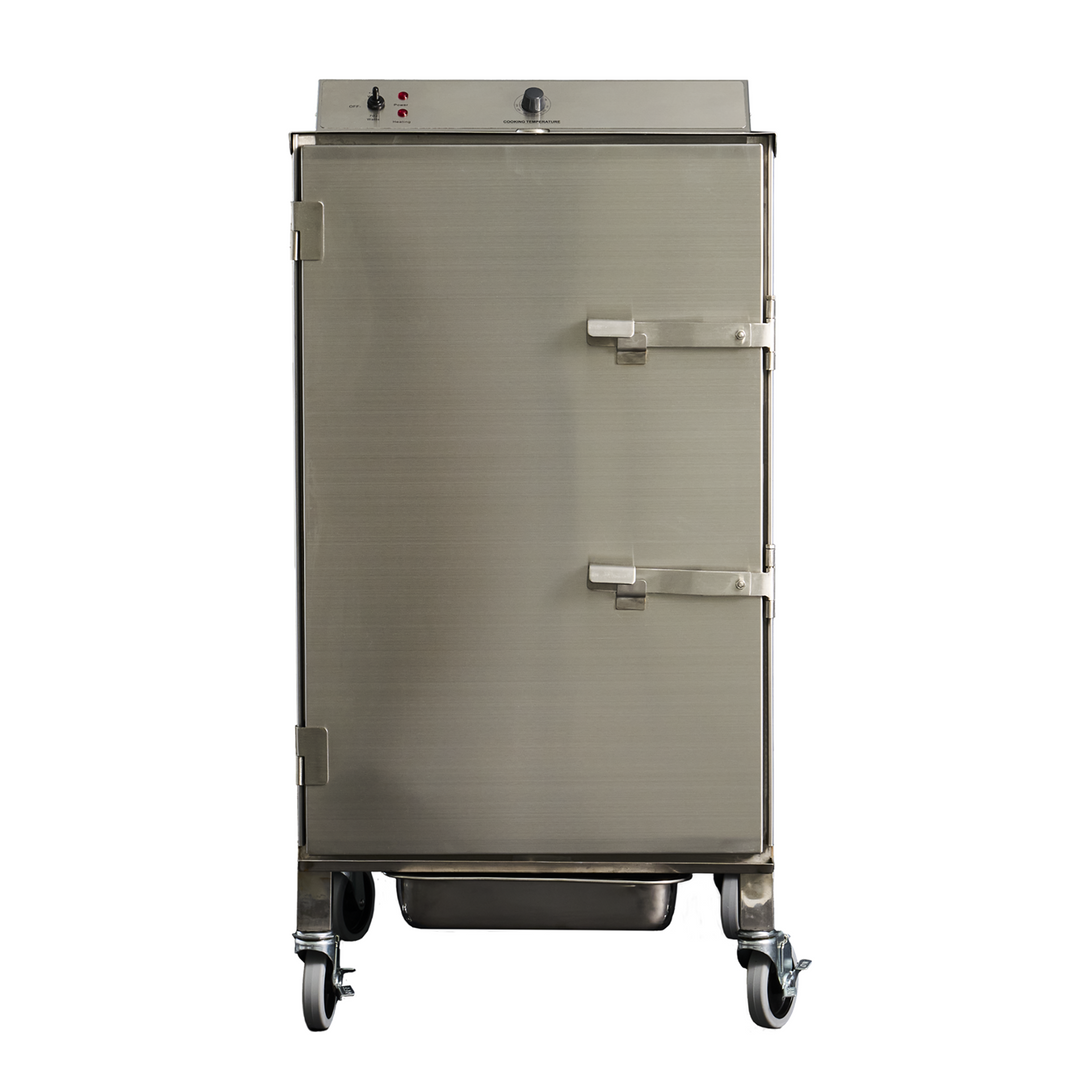
SmokinTex 1500-C
Start here when an 18 × 18-inch rack fits your food and staff will manage the end of the cook.
- Rack size
- 18 × 18 in
- Cabinet depth
- 23 in
Arrange holding separately after cooking.
COMMERCIAL SMOKER COMPARISON
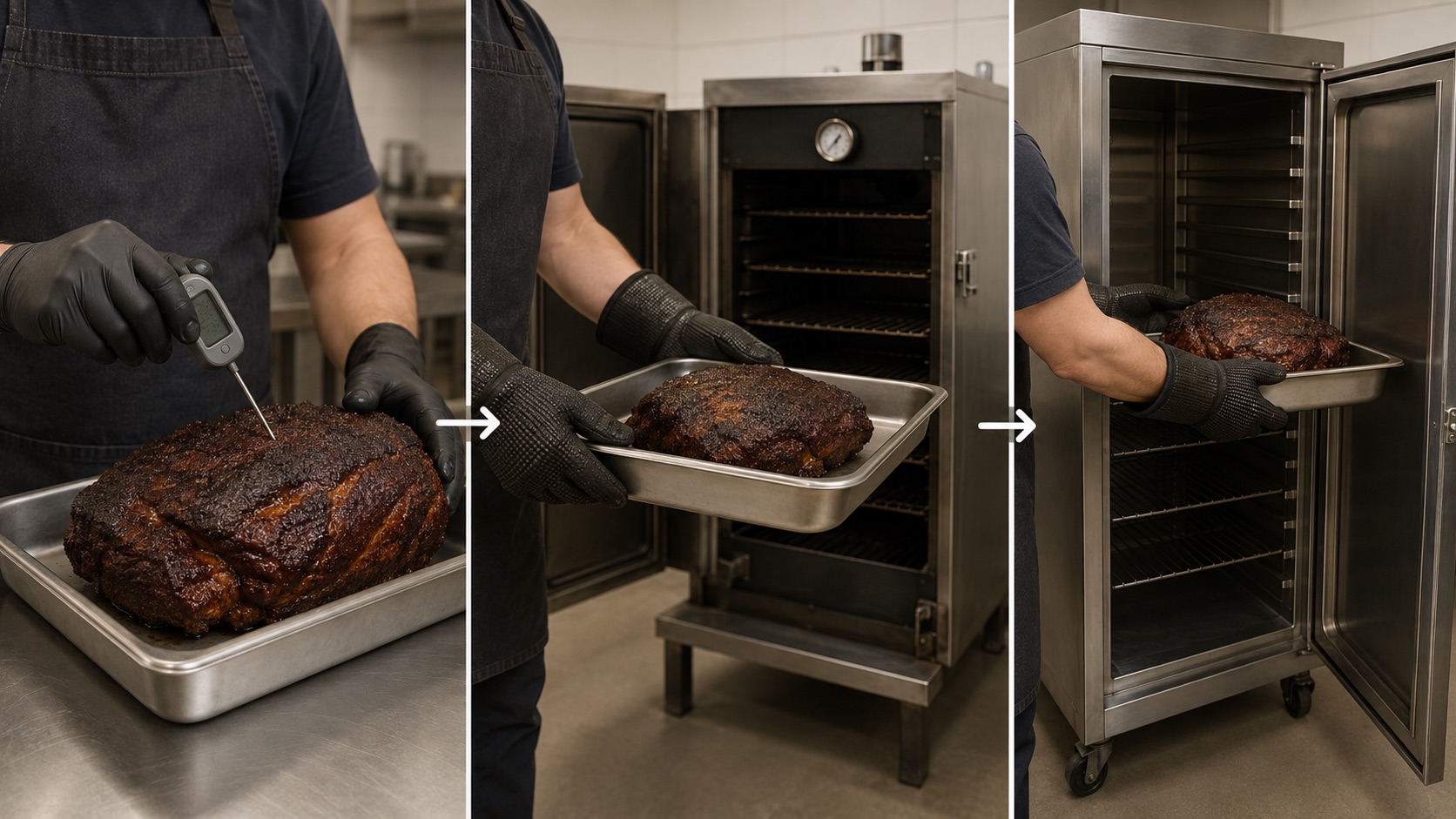
For a restaurant planning roughly 40–60 lb batches, compare staff-managed cooking, timed holding and probe-triggered holding before deciding on cabinet size.
As an Amazon Associate I earn from qualifying purchases.
Sources & approach ↗CHOOSE THE END OF THE COOK
Each choice changes who or what starts holding. Match that step to the way your kitchen runs.
STAFF-MANAGED RACK COOKING
Start here when an 18 × 18-inch rack fits your food and staff will manage the end of the cook.
Arrange holding separately after cooking.
Need more rack depth? Compare the CXLD dimensions
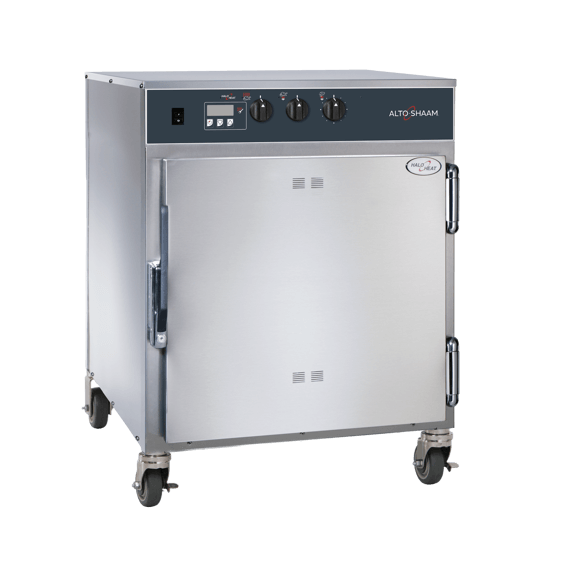
HOLD AFTER A SET TIME
The oven switches from cooking to holding when the cooking timer ends.
The Classic controller does not use a meat-probe target to trigger holding. Confirm the quoted controls and voltage.
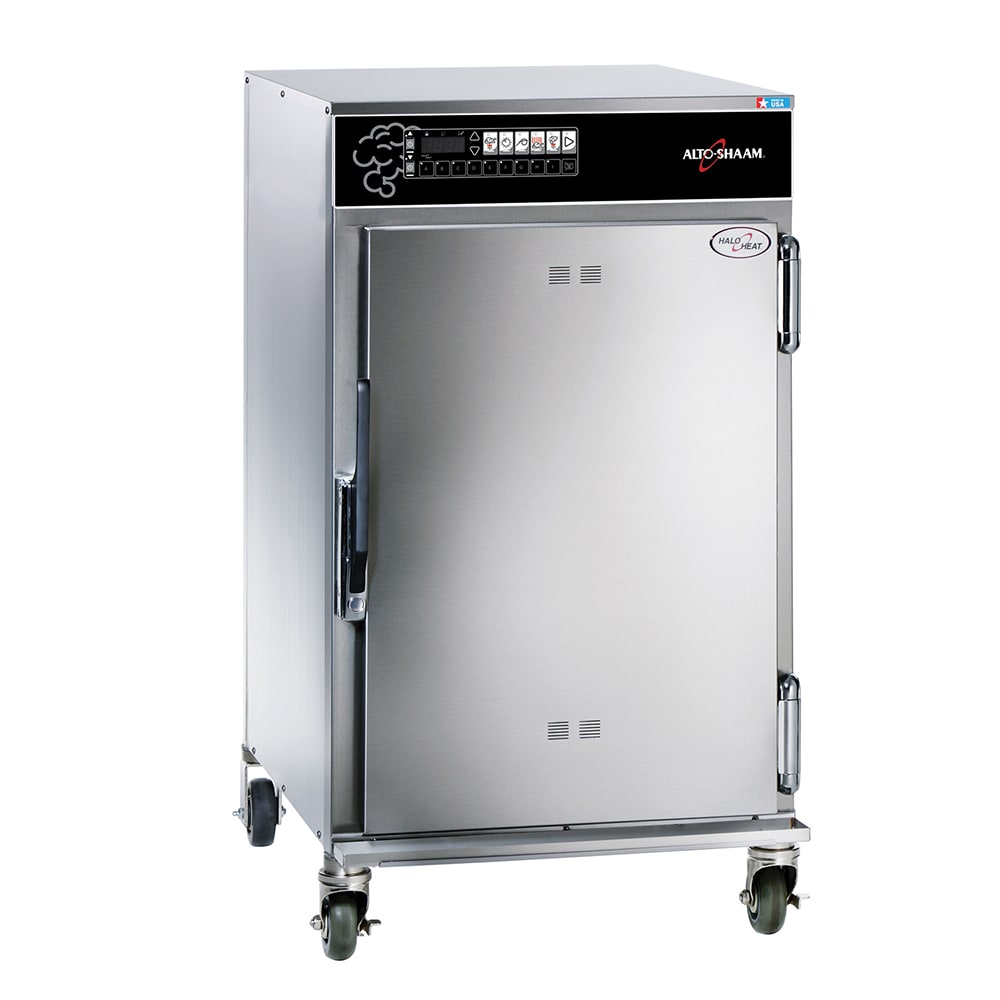
HOLD AFTER A PROBE TARGET
The legacy /III can finish cooking by time or food-probe temperature, then automatically change to holding.
Match the exact /III model and electrical configuration. Current 1000-SK controls are different products.
COMPARE THE CONTROLS
A timer and a food probe answer different questions. Check the controller on the exact unit offered.
Swipe to compare all columns.
| What matters | SmokinTex 1500-C | Alto-Shaam 767-SK Classic | Alto-Shaam 1000-SK/III |
|---|---|---|---|
| What triggers holding? | Staff arrange the move. | The set cooking time ends. | The time or food-probe target is reached. |
| Why start here? | You can monitor the batch and already have a holding plan. | Your process calls for a timed change to holding. | You want the food-probe target to trigger the change. |
| What to confirm | Rack fit and separate holding equipment. | Classic controls and quoted voltage. | Legacy /III identity, 208/240V configuration and original documents. |
PLAN THE BATCH
Start with the largest cut, the racks or pans you will use and the serving time.
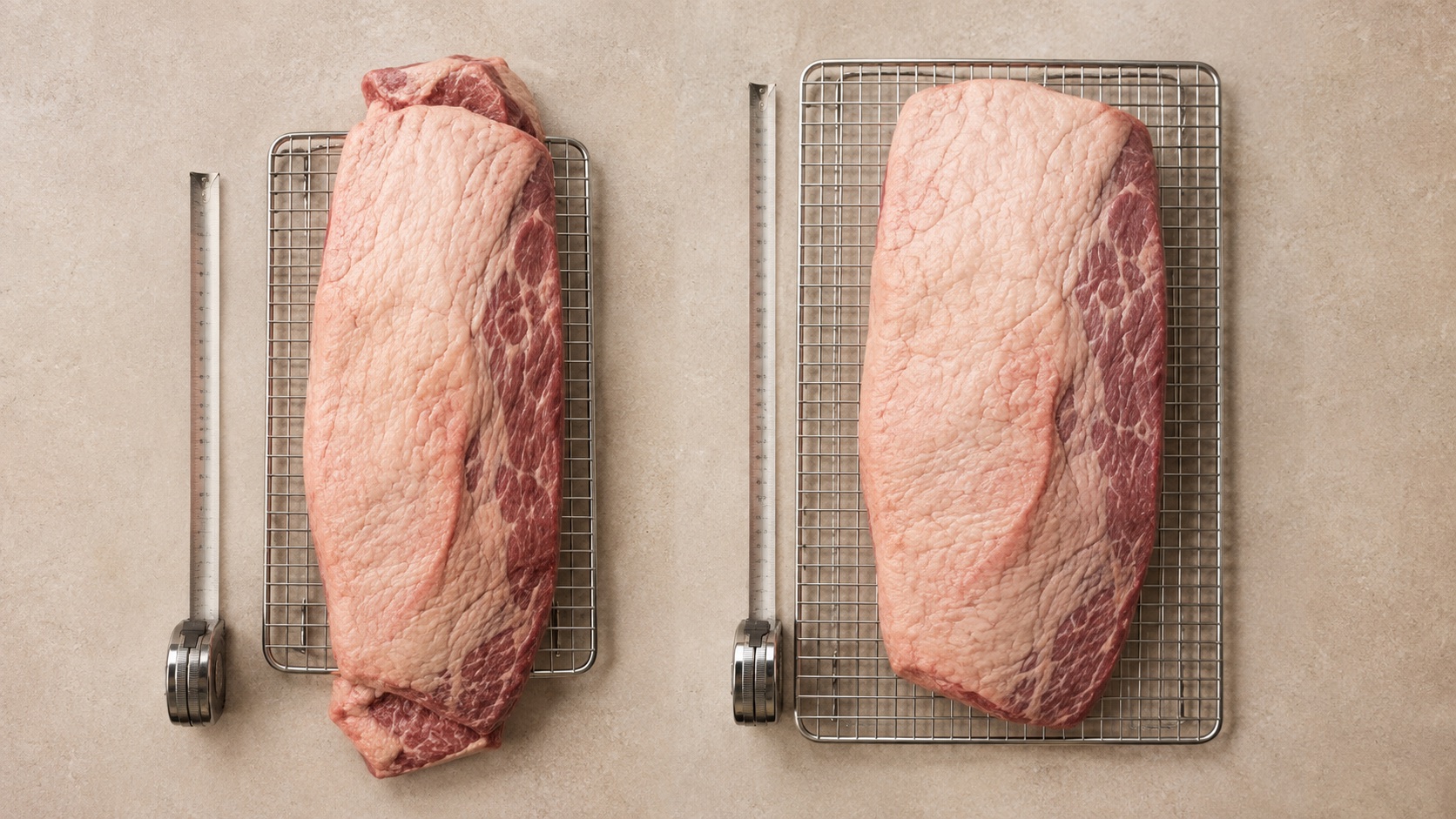
The 1500-C uses an 18 × 18-inch rack. Compare the CXLD’s 18 × 22-inch rack if your longer cuts need it; both choices still need an operator-managed holding plan.
Check which shelves and pans come with the offer. Thick food may change how many levels you can use even when the cabinet has room for more pans.
Confirm included shelves and food clearance for the legacy model. A current 1000-SK listing or manual may describe a different controller and configuration.
MAKE THE SETUP WORK
Allow for loading, door opening, cleaning and any separate holding equipment. Cabinet footprint is only part of the working area.
Give the installer the quoted model and its matching documents. Do not substitute another voltage or controller generation.
Decide who checks the food, where it is held and how it reaches service. Automatic holding is one equipment function within that routine.
COMPARE SELLERS
Confirm configuration, included equipment, freight and current delivery terms.
A DIFFERENT MAIN JOB?
We compare published model information, not hands-on test results. Manufacturer information was checked on September 6, 2026. Model names that include pounds are not a measured output promise for your menu.
The 1000-SK/III photograph is from KaTom and shows the legacy button-control model. Other product photos are from manufacturers. The /III capability comparison uses the original April 2017 specification, checked on September 6, 2026; it does not describe the current 1000-SK. The 40–60 lb batch is a planning scenario, not a tested output promise. Scene images illustrate buying considerations.
Confirm the exact configuration, included equipment and seller terms before ordering. We may earn from qualifying Amazon purchases.